☰ Menu
News Archive

2025

New BACC all-sky camera at Alomar!
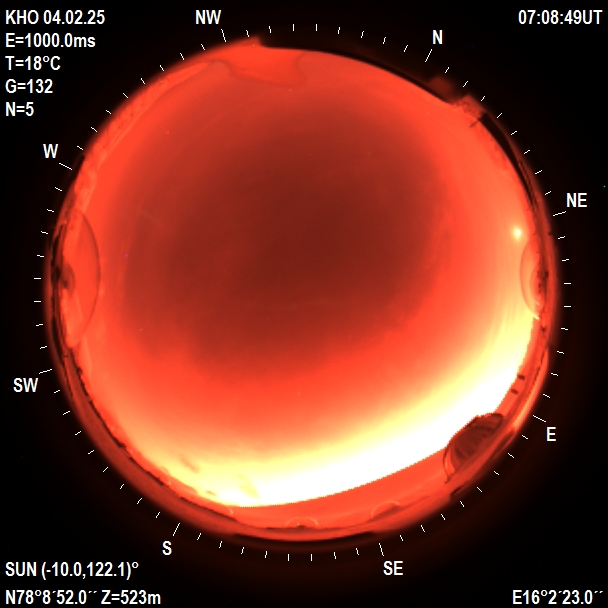
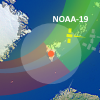
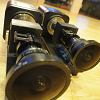
Our Boreal Aurora Camera Constellation (BACC) is slowly expanding in size since we started it back in 2015. The constellation has a low-cost philosophy with minimum administrative oversight and load. Camera number 6 is now installed at the Alomar Observatory operated by Andøya Space. We now cover northern Scandinavia and Svalbard with real-time all-sky views of the auroral oval. Data is used to improve our auroral forecast capability. See cameras field of view (coverage).

Read details here.

10 December, 2025

Mission complete!
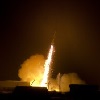
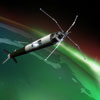
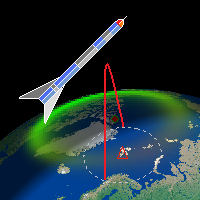
KHO has successfully supported the NASA Rocket Experiment for Neutral Upwelling 3 (RENU-3) campaign. Our instruments together with the EISCAT Svalbard radar tracked and identified the target aurora. The four-stage, state-of-the-art sounding rocket (Black Brant XII) was launched at 09:52 UT from Andøya Space. It used only 6 minutes and 50 seconds to reach apogee at an altitude of 479 km over Svalbard. Congratulations to all the teams at UNH, NASA Wallops, EISCAT, SuperDARN, UCL, KSAT and Andøya.

Press release Andøya Space.
Diana Swanson's launch video.
Nordlys+ news article (norwegian)

23 November, 2025

Coming up!
KHO is part of the upcoming NASA sounding rocket campaign named Rocket Experiment for Neutral Upwelling 3 (RENU-3). The payload is designed to measure neutral gas, ions and electrons associated with Poleward Moving Auroral Forms (PMAFs) in the dayside Cusp. The first possible launch window is 13 - 27 of November. PI is Prof. Marc Lessard from University of New Hampshire (UNH).

AGU abstract.

11 August, 2025

White aurora!
Continuum emission has been observed embedded in the dayside aurora over Svalbard. It is a broadband emission that looks nearly white in the full-colour all-sky images, while the spectrographs see an enhancement in the whole wavelength range from 400 to 700 nm. The continuum emission structures move and evolve with the aurora, and are associated with both plasma and neutral heating. This may be a more dynamic cousin of STEVE ...

Read paper here and Noora's UNIS report.

3 July, 2025

Fond memories 80's
Today we received a history preview from Dr. Nick Lloyd from the University of Saskatchewan in Canada of the Auroral station in Adventdalen. The panorama dates to the winter season 1982/83...

Read more here.

3 June, 2025

Government white paper
The Norwegian government white paper on Svalbard (2023-2024) recognizes our activity on Breinosa as a world-leading space weather infrastructure. See textbox 4.4 in Chapter 4. We are happy together with our partners for this recognition and will continue to serve and improve our aurora forecasts to the public.

Read white paper here.

19 May, 2025

Australia joins KHO!
We are proud to announce that Western Sydney University (WSU) has joined the observatory. Dr. Greg Cohen and his team from the International Centre for Neuromorphic Systems (ICNS) are experts in event-based camera sensors. We look forward to co-operate and test the new technology on both aurora and on our hyperspectral cameras.

Visit ICNS.

14 April, 2025

Spotlight on Optics!
Eureka! The Optica Publishing Group has chosen our paper: Near infra-red black silicon pushbroom hyperspectral imager, for inclusion in Spotlight on Optics.

Read the summary here.

9 April, 2025

Fram2 mission complete!
Fram2 astronauts including Norway's first vehicle commander Jannicke Mikkelsen have teamed up with UNIS space physicists. The mission is the first human manned polar orbit commercial spaceflight. The SolarMaX citizen scientist project are supporting the mission with simultaneous auroral ground data.

Fram2 was successfully launch at 01:46 UTC on Tuesday 1st of April 2025 from Kennedy Space Center in Florida. The mission is complete and splashdown was today at 16:19 UTC. Congratulation to Jannicke and her team!

Read the latest SolarMaX updates here.

4 April, 2025

NEW Planeterrella!
Olivier Katz and Baptiste Falque from the University of Grenoble have installed and demonstrated our new Planeterrella reconstructed by Prof. Jean Lilensten. It's capable of creating artificial aurora just like Kristian Birkeland did back at the turn of the 19th century. View amazing displays recorded by Lotte van Hazendonk in the below links.

Images [ 1, 2, 3, 4] and movies [ 1, 2, 3]

5 March, 2025

Asteroid impact?
Prof. II Kjellmar Oksavik strikes again on TV2 Play TikTok! He informs that the asteroid identified as 2024 YR4 discovered last Christmas, will according to calculations by NASA, luckily not hit Earth in 8 years. That is a great relief!

See TV2 TikTok.

25 February, 2025

BBC radio visit
Listen to BBC CrowdScience episode titled: Why isn't the sky green? Katie Herlingshaw explained the sky colors and scattering. She also guided the crew for an excursion up to the observatory. Well done, Katie!

Listen here.

21 February, 2025

Podcast: Norways Sol-Pål!
Listen to Norwegian podcast on Spotify with our Prof. II Pål Brekke. Here he small talks about the Sun, Aurora, KHO, AGF-216, belt wagons and other space activities on Svalbard. Lots of topics are covered, even Karlsberger pub.

Romkapsel podcast: Episode 275.

16 February, 2025

Kjellmar in Space?
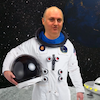
View video snap of our Prof. II Kjellmar Oksavik on TV2 Play. He is dressed in a space suit for the event, explaining why we have high auroral activity the next couple of years. Excellent, Kjellmar!

See video here.

13 February, 2025

New prototype published!
Our prototype Near-Infra Red Hyper Spectral Imager version 7 (NIR HSI v7) is now published in the journal Optics Continuum (Optica). The instrument is assembled using 3D printing. Furthermore, it uses a new novel high speed Black Silicon CMOS image sensor.

Read paper here.

12 February, 2025

The Red-Sky Enigma returns
From mid-January with the return of nautical to civil twilight conditions on Svalbard, a red-purple sky color is daily observed with the rise of the Sun - even though it's way below the horizon. This effect is due to a long period of cold temperatures (-85oC) in the Stratosphere over Svalbard and the mainland. As a consequence, Polar Stratospheric Clouds (PSC) are formed, ducting and scattering the solar light into the dark illuminated polar hemisphere. The process is explained in our Red-Sky Enigma paper published back in 2005.

Read paper here.

4 February, 2025

Observatory science highlights!
Read Katie Herlingshaw et al. (2025) extensive publication in the Journal Arctic Science on KHO highlights. A historic compilation that spans over 4 decades from the old Nordlysstasjonen in Adventdalen (1978) and up until today. Well done, Katie!

Read milestone paper.

3 February, 2025

HYPSO-2 works!
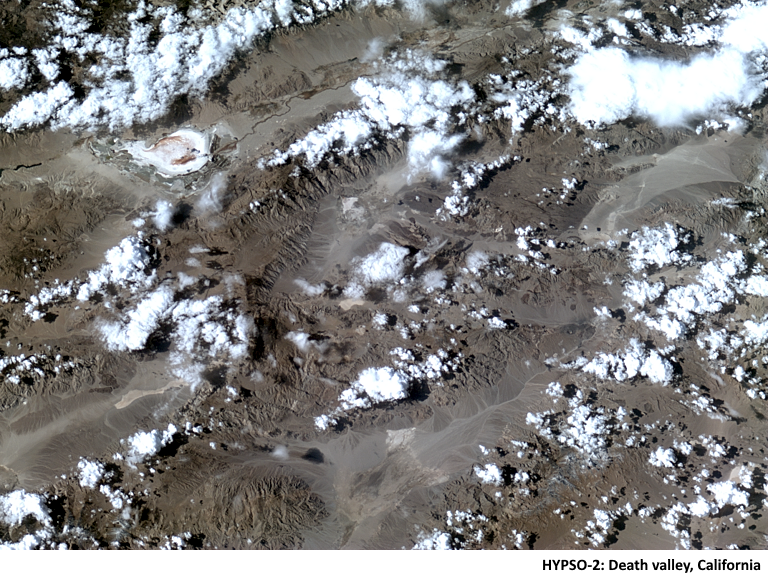
We are proud to report that the HYPSO-2 satellite works as planned with sharp focus on both camera systems. The improved payload consist of our designed Hyper Spectral Imager (HSI v6) and a regular RGB camera.

See stunning images in Gemini.no

31 January, 2025

Is the Aurora disappearing from Svalbard?
Mikkel Breedveld and Stein Haaland points out that the magnetic pole moves in position and will consequently shift the auroral oval 5-6 km South each year if the current changes in the Earth's magnetic field continues. The question of how long we will see aurora from Svalbard is raised.

Read Svalbardposten feature article.

30 January, 2025

2024

First test of MISS 2
We are happy to present Jesse Delbressine work on optimalization and initial dark sky test of the Meridian Imaging Svalbard Spectrograph 2 (MISS 2). He installed and made the instrument operational at KHO. Thanks Jesse!

Read report here.

30 December, 2024

Master Nicolas!
Congratulate to Nicolas Mathieu Vincent Martinez who has successfully defended his Master thesis at Luleå Technical University (LTU) and UNIS. He has documented and programed the new Meridian Imaging Svalbard Spectrograph no. 2 (MISS 2). We are very pleased with his work and look forward to testing it on aurora.

Read thesis here.

9 December, 2024

Skibotn Astrophysical Observatory
Professor Jan-Erik Solheim has compiled the history of the legendary Skibotn Astrophysical Observatory (1971-2002) and how it has evolved since then. The article is in Norwegian.

Read history here.

1 November, 2024

UNIS teams up with the Fram 2 mission
Fram 2 astronauts including the Norwegian filmmaker Jannicke Mikkelsen Team Up with UNIS Space Physicists and Citizen Scientists. It is the first human space mission to travel around the Earth's polar regions. Dr Katie Herlingshaw coordinates the SolarMax Citizen Scientist project which aims to support the mission with simultaneous auroral ground data.

More information here.

10 October, 2024

Wake up!
Norway is on the verge of becoming a top dog in small satellite construction with the launch of the HYPSO-2 hyper spectral imager into orbit. It is time to visualize a new upcoming space industry with unprecedented potential, if we dare to jump.

See Svalbardposten feature article.

2 October, 2024

Good morning Norway
Our very own Prof. II, Pål Brekke explains the aurora on the norwegian TV2 news channel show named 'God morgen Norge'. Note that the visualizations and graphics are stunnnig. Well done Pål!

See interview here.

27 September, 2024

Life on Earth?
The results from the Endurance rocket launch from Ny-Ålesund back in May 2022 is now published in Nature. The rocket measured high altitude electric fields. These fields are fortunately too weak for the atmosphere to escape into space. The magnetic field of Earth protect our atmosphere from the solar wind, and life can exist.

Read Haaland and Baddeley's feature article in Svalbardposten.

9 September, 2024

HYPSO-2 launched!
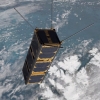
The Viking Saga needs an update! Today the NTNU HYPSO-2 satellite was launched successfully by the Space X Transporter 11 rideshare mission from Vandenberg in California. The satellite contains an upgraded version of our Hyper Spectral Imager version 6 (HSI V6) that flies with the HYPSO-1 satellite. The instrumental design is developed at KHO. Salute! We are now space born for the second time!

Read NASA Space Flight (NSF) article here.
See Space X launch video.
Download HYPSO-2 sticker

15 August, 2024

Cloud study
Student Alessandro Marocco from ENS in Paris has validated the Aurora Cloud Sensor III. The conclusion is that we can use a threshold clarity value to reliably differentiate between cloudy and clear sky conditions. The threshold is found not changing significantly from year to year over the period of data collection since 2016. Validation data were manually labelled auroral all-sky images and total cloudiness from the airport.

Read report here.

10 July, 2024

Summer has arrived!
As a local tradition, it is finally summer when the stem of the Champagne glass is broken. Or, when the snow melts across the steep downhill, located just to the right of the hilltop named Tenoren. Seen from Longyearbyen, it is shaped as a Champagne glass on the westward facing mountain side of The Opera Mountain. It happened today!

Click on left icon to view full resolution.

18 June, 2024

New dome work in progress...
The work continues to replace our domes that have been water leaking. In addition, LNS Spitsbergen has come up with a solution on how to mount our sun protective aluminum dome covers. This will be tested, and if necessary improved before the next dark season starts.

14 June, 2024

Extreme Geomagnetic storm (G5)!
Five Coronal Mass Ejections (CMEs) from an extremely hyperactive sunspot region of the Sun (AR3664) crashed into our atmosphere in the late evening of 10th of May. Their arrival was immediately detected by our non-optical instruments. In addition, our Norwegian satellites HYPSO-1, NORSAT-TD and SelfieSat-1 lost up to 2 km of altitude during the event. According to radio amateur Stig Onarheim, HF radio communication was totally blocked, and hut owner Sverre Mejlœnder-Larsen at Vindodden reported extreme low internet connectivity to Starlink. Way South, jaw-dropping auroras were observed during dark sky night conditions.

Read Stein Haaland's Svalbardposten feature article here.

15 May, 2024

Professor Lisa Baddeley!
Salute! We congratulate Lisa on becoming a full Professor in Space physics at the Geophysical department at UNIS. She has become a top dog in experimental radar applications.

Well done, Lisa!

26 January, 2024

Black CMOS aurora
On 9th of January, we tested a Black silicon CMOS development kit from the company SIONYX for the first time. A snapshot image of a low intensity (1-2 kR) red colored post noon auroral arc was identified as soon as we turned the system on. The camera operated at impressive 90 frames / second with only 11 msec exposure time. The test is part of the new design of a Near Infra-Red (NIR) hyperspectral imager.

See more info here.

9 January, 2024

2023

What the heck is that?
Today at 08:57 UT, an unidentified object smashed into the field of view of our all-sky cameras. It moved quickly across the sky from the South-East towards North-West horizon, leaving trails of solar illuminated stuff in the upper atmosphere. The object was simultaneously detected from the UiO camera in Ny-Ålesund. We suspect the event to be a Russian rocket that created the Twilight Effect. Read UNIS newletter here.

See 30s all-sky movie of the event.

21 December, 2023

Doctora Marie Bøe Henriksen!
Salute! Marie Bøe Henriksen has with flying colors defended her PhD thesis titled: "On the Calibration and Optical Performance of a Hyperspectral Imager for Drones and Small Satellites: From First Prototypes to In-Orbit Results ". The defense was at NTNU on Friday 15th of December 2023. Read thesis here.
15 December, 2023

CanSats, Drones and Spectacular Views
Associate prof. Lisa Baddeley reports on AGF-223 field work at KHO where the students launched their own small satellite payload from a drone. Read UNIS newsletter here.
13 November, 2023

New hyperspectral designs
The design to create both a Near Infra-Red (NIR 600 - 1200 nm) and a Short Wave Infra-Red (SWIR 1000 - 1600 nm) Hyper Spectral Imager for the HYPSO-3 satellite mission has started, utilizing new technology, high speed black silicon and indium gallium arsenide image sensors.
24 October, 2023

Long-range hyperspectral shooting
An experiment to test out telescopes as front optics to our Hyper Spectral Imager version 6 (HSI v6) has started. The aim is to improve the spatial resolution and evaluate a possible design for the next generation HYPSO-3 satellite. Goto Experiment.
25 April, 2023

New Mega project!
In 2023, Katie Herlingshaw received 8 million NOK funding from the Norwegian Research Council for the call for the Researcher Project for Young Talents (see project here).

The project is 4-years long and involves data from KHO cameras, spectrographs, and photometers. The target of the grant is to further the understanding of aurora-like features at the polewards edge of the auroral oval and compare them to aurora-like features at the equatorwards edge. Aurora-like means that the features are not caused by particle precipitation, but some other unknown mechanism that is local to the ionosphere. The research will primarily focus on Fragmented Aurora-like Emissions, a small-scale, short-lived phenomenon first documented in the scientific literature over Svalbard using KHO all-sky camera and Meridian Scanning Photometer data in 2021. A new 4-year PhD student, Lena Mielke, has been funded using the research grant and UNIS support to work on the topic and started in March 2024.

4 July, 2023

Aurora Forecast Rocketeer
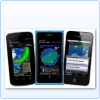
Based on user feedback a new simplified version of the Aurora Forecast app is published today on Apple App Store (iOS) and Google Play (Android). The aim is to provide an easy-to-use app with focus on auroral forecasting using only your phone location sensor. New feature is virtual space travel by rocket to other planets in the solar system. Note that the old 3D app will still be updated.
More info and computer downloads here.
July 14, 2023

12 years in service!
Version 8.5 of our Aurora Forecast 3D app is now published in Google Play (Android) and App Store (iOS). The work to provide a free of charge mobile auroral forecast service dates back to 2011. It is now downloaded more than 100K+ and is rated above 4 on a 5-point rating scale.
More info and computer downloads here.
June 2, 2023

Extraterrestrials?
FMI is dedicated to operating their BACC #4 camera at Muonio until the very end of the optical season. They do not want to miss a single aurora event even! See image of unexpected guest inspecting the all-sky camera lens here.
April 1, 2023

Star visit
Irish star comedian and UK television presenter Dara Ó Briain has visited our observatory. Katie and Lisa turned the aurora ON, and Dara reported from the roof of KHO that is was a brilliant light show! See tweet here.
Januar 29, 2023

HYPSO-1 First publication!
The first scientific paper with data from our hyperspectral imager onboard the HYPSO-1 satellite is now published in Remote sensing. The satellite is one of the smallest of its kind performing ocean spectral scanning with high signal to noise characteristics. Read paper.
Januar 28, 2023

Instrumental boost
Several new groups and instruments have finally joined the observatory after the pandemic. Two high-end interferometer systems, a single wavelength all-sky camera, a Near-InfraRed (NIR) spectrometer, a NIR camera and a GNSS receiver have been installed successfully. See below links for further information.
Januar 10, 2023

#New instrumentsGroup
1The Hot Oxygen Doppler Imager (HODI)NJIT
2Fabry Perot Interferometer (FPI)PRIC
3Single-wavelength Auroral Imager (SAI)PRIC
4Near InfraRed Aurora and airglow Spectrograph - 2 (NIRAS-2)NIPR
5Near InfraRed Aurora Camera (NIRAC)NIPR
6Global Navigation Satellite Systems receiver (GNSS)UCB

2022

PRIDE project
Congratulations to Masters student Cecily Noaillac from ISAE Supaero, Toulouse who has completed her Masters project named: Waves in the ionosphere detected using the Polar Research Ionospheric Doppler Experiment (PRIDE). The project has finalized the set up of a new instrument and database at KHO.
December 12, 2022

Calibration lecture
We are pleased to announce iEarth internship report by Raphael Deirmendjian about calibration stability of the Silver Bullet spectrometer aimed at long term mesospheric temperature retrieval. Well done, Raphael!
Youtube lecture and link to report here.
November 10, 2022

50 ambassadors!
In mid-October we were lucky to host a massive visit of 50 ambassadors to the observatory. The trip was organized by the Norwegian Ministry of Foreign Affairs. After 2 lectures at UNIS, 2 bus trips and 4 rides with our bandwagons, the ambassadors were transported up to KHO and informed about our activity.
Link to Svalbardposten (Norwegian) here.
October 12, 2022

Outstanding paper award
Congratulation to our PhD student Marie Bøe Henriksen for receiving the 2022 Outstanding paper award at the 12th Workshop on Hyperspectral Image and Signal Processing: Evolution in Remote Sensing (WHISPERS) in Rome, Italy. Marie has taken a closer look at wavelength calibration. View ceremonial event.
Link to paper here.
September 16, 2022

3D model of KHO
Ever wondered what KHO looks like in 3D from all thinkable angles? Stop wondering, and take a look here at the drone based work of iEarth PhD student Rafael Kenji Horota.
Link to model here.
August 9, 2022

HYPSO-1 works!
We are proud to report together with NTNU AMOS that our satellite named HYPSO (HYPer-spectral Satellite for ocean Observation 1) is working as planned. Access English reader post here.
Norwegian translation published in Svalbardposten.
July 12, 2022

The Rise of Phoenix
The rise of the Svalbard SuperDARN radar masts have been completed by our Postdocs and PhD students, also known as the Snowdrift girls. The original radar was hit hardly by extreme icing conditions back in late October 2018. Good job!
Goto Facebook video link
May 11, 2022

La Professora Partamies!
We congratulate Noora on becoming a full Professor in Middle atmospheric physics at the Geophysical department at UNIS. She has a long history with us, first as a student back in 96 and now she has become a top dog.
Well done Noora!
Mars 11, 2022

Chronicle in Agderposten
The one and only, our Prof. II Pål Brekke has written a news article about Svalbard’s unique position to study the dayside aurora in Agderposten. One of Norway’s largest newspapers.
Read article here
Mars 5, 2022

Night at the Observatory
Read Maria Philippa Rossi’s excellent story of UNIS AGF-301 students staying a night at the observatory. Here they learn how to connect-the-dots between space weather and aurora.
Read article here
February 24, 2022

HSIv6 published!
Congratulation to our PhD student Marie Bøe Henriksen. She has published a Do It Yourself (DIY) paper in Optica on the Hyper Spectral Imager (HSI) version 6, which is a prototype instrument for the HYPSO satellite. The journal reports it as one of the 10 Top downloads from February.
Read paper here
February 16, 2022

HYPSO-1 launched!
HYPer-spectral Smallsat for ocean Observation (HYPSO) was launched today at 15:25UT by a SpaceX Falcon-9 rocket from Kennedy Space Center in Florida. The satellite contains a hyperspectral imager that is constructed by students at NTNU AMOS based on a design developed at KHO. Salute! We are now space born!
Info:[Press release] [HYPSO-1] [Launch]
January 13, 2022

2021

SVALBIRD airborne!
Together with Eindhoven University of Technology (TU/e) we congratulate Brandon von Schaik on his Erasmu+ Traineeship at UNIS. He has initiated and evaluated the possibility to use high altitude balloons or drones to detected aurora above the cloud layer of KHO.
Read more here.
December 16, 2021

FINALLY launched!
The C-REX-2A rocket was finally launched succesfully today at 09:25:00 UT from Andøya Space. All twenty of the sub-payloads deployed as planned. Congratulations to the entire team at Andøya, KHO, Svalbard EISCAT radar, Ny-Ålesund and the NASA airplane over Greenland.

See NASA press release.

December 1, 2021
Coming Up!
KHO is part of the Cusp Region EXperiment 2A (C-REX-2A), a NASA sounding rocket mission that will release 20 artificial clouds into the ionosphere above the Greenland Sea. First possible launch window 01 - 16 of December.

Watch Why to launch video?

November 12, 2021

SS-520-3 launched!
Congratulation to JAXA (Japan Aerospace eXploration Agency) and NIPR (National Institute of Polar Reseach). Their SS-520-3 rocket was successfully launched at 10:09:25 UT by Andøya Space into the dayside cusp from the Svalbard Rocket Range (Svalrak) in Ny-Ålesund. KHO provided optical support for the campaign which is part of the Grand Challenge Initiative (GCI).
November 4, 2021

Master Anton Goertz!
Congratulations to Master Anton Goertz! His Masters project used All-Sky Camera data and Meridian Scanning Photometer data from Ny Ålesund and the KHO, along with SuperDARN radar data to investigate Poleward Moving Auroral Forms (PMAFs). In his thesis he used an arciness index to quantify, for the first time, how the morphology of PMAFs changes as they move from the dayside auroral region and into the polar cap. He also studied instances of ionospheric plasma flow channels forming around the PMAFs as they move. He is heading off to Los Alamos, USA to continue with his studies. Good luck!
September 2, 2021

Doctor Fasil Tesema!
Salute! Congratulation to Fasil Tesema Kebede. Today he successfully defended his PhD thesis titled: "Energetic electron precipitation of pulsating aurorae and their mesospheric effects".

Read more here.

June 17, 2021

Master C.M. van Hazendonk!
Congratulations to Master Charlotte van Hazendonk! She studied cutoff latitudes of protons during solar energetic particle events using particle flux data from GPS satellites. In her thesis, she presented a new method for determining proton cutoff latitudes using GPS and GOES particle flux measurements and studied the behaviour of cutoff latitudes in different solar wind and geomagnetic conditions.
02.06 2021

Sky colors
Version 7.4 of the Aurora Forecast 3D app is now released and reviewed by Apple and Google. It includes the Perez model for sky illuminance that simulates clear sky color conditions as a function of solar position - observed from any ground position on the planet. It runs stable on all platforms with less than 1 second background execution.
May 05, 2021

High HSI compression ratio
Erasmu+ Trainee Adrienne Esmeralda Oudijk has published her work on Hyper Spectral Imaging (HSI) compression. The spectral data cube is compressed by a factor of 10-5 with minimum loss of spatial resolution and spectral signature.
See IEEE Whispers paper and video presentation.
Mars 24, 2021

Pulsating aurora and O3?
Our PhD candidate Fasil Tesema Kebede has published work on how high energetic electron precipitation causing pulsating aurora may affect upper atmospheric chemistry and ozone destruction.
More details here.
Mars 12, 2021

Space Hurricane!
Our very own Director Prof. Jøran Idar Moen and Adjunct Prof. Kjellmar Oksavik at UNIS have together with an international team discovered a polar ionospheric Space Hurricane, which is published in Nature. This discovery sheds new light on how Earth is coupled to space.
Link to paper here.
February 22, 2021

Doctora K. Herlingshaw!
Salute! Katie Herlingshaw has defended her PhD thesis titled: "Characterising Mesoscale Fast Flow Channels in the Polar Cap Ionosphere" The defense was on Friday 22nd of January 2021.

Read thesis here.

January 18, 2021

Video trip!
Do you want to see the inside of KHO? Join Head engineer Mikko Syrjäsuo, and PhD students Katie Herlingshaw and Nina Kristine Eriksen on a video trip through the observatory.
Watch Youtube video.
January 15, 2021

Aurora Forecast 3D Demo
The Aurora Forecast 3D is a tool to track down where the aurora is located in the sky from any location on planet. It renders Earth in 3D with rotation and scaling at your fingertips. This video demonstrates the app.
Watch Youtube video.
January 30, 2021

2020

Day/Nightside aurora?
Our very own Professor Dag Lorentzen explains the difference between dayside and nightside aurora. This article was also published in the local news paper Svalbardposten. See norwegian translation here.
Read english version here.
December 29, 2020

New aurora forecasts
We are happy to announce that release version 6.8 of our Aurora Forecast 3D app now includes two new models of the aurora ovals. Both models are based on years of polar orbiting satellite data from NASA.

October 29, 2020

Mysterious neighbor?
To our big surprise a new construction appeared out of nowhere by the road up to the observatory last week. It turned out to be a new vault storing precious American goods for the future. We hope to be invited to the grand opening.

More info here.
October 24, 2020

Master Breedveld!
Congratulation to Master Mikkel J. Breedveld! He has studied polar orbiting POES / MetOP satellite precipitation data and made new auroral ovals for us. His work will be used in our Aurora Forecast 3D app.

Read thesis here.
July 2, 2020

Silver Bullet is upgraded!
After 40 years of service, the rotary motor system of the Silver Bullet spectrometer died on us. Luckily, it happened at the end of the dark season . A new high precision servo system is now installed.

Read details here.
June 17, 2020

TU/e Trainee
Together with Eindhoven University of Technology (TU/e) we congratulate Adrienne Esmeralda Oudijk on her Erasmu+ Traineeship at UNIS. She has used our Hyper Spectral Imager v6 and found how to compress the spectral data cube by a factor of 10-4 with minimum loss of spatial resolution and spectral signature.

Read report here.
June 12, 2020

Linux test release!
Our popular Aurora Forecast 3D app is now finally available for testing on Linux platforms. The app is compiled in Windows 10 loaded with Delphi RAD studio 10.3 Architect using FMXLinux onto a 64-bit Ubuntu 18.04.4 LTS Linux computer.

Goto download page with instructions here.

May 8, 2020

Snowhow!
KHO is part of the TV series named Snowhow that starts on 2nd January 2020. The theme is the Nordic winter and how we cope with it. It is produced by NRK in association with SVT, YLE and NDR.

See NRK link here.

January 1, 2020

2019

Aurora Seashell!
Jennifer Briggs, a physics student at Pepperdine University in Malibu, has analyzed our BACC data and discovered a new type of twisted dayside aurora related to an extreme foreshock out in the magnetosphere.

Link NASA statement, Space.com or Forbes

December 24, 2019

Dr. Erkka Petteri Heino!
We are proud to announce that on Wednesday 18th December 2019 Erkka Petteri Heino successfully defended his PhD thesis titled: Spatial extent of solar proton impact in the Earth's atmosphere - Observations and modeling.

Read thesis here.

December 14, 2019

Master Erlend S. Kallelid
We congratulate Master Erlend Salte Kallelid! He has studied how the ionosphere responds to intense substorms and energetic electron precipitation using data from both magnetometers and riometers.

Read thesis here.

December 2019

CHI launched!
Left shows as observed from KHO, one out of eight Barium / Strontium high altitude clouds released from the Cusp Heating Investigation (CHI) NASA rocket. It was launched successfully at 09:30 UT from SvalRak. PI of the campaign is Prof. Miguel Larsen from the Clemson University in USA. More info here. Video Clips [ 1, 2, 3, 4, 5, 6]
Scrns [ 1, 2, 3, 4, 5, 6, 7, 8, 9, 10, 11, 12, 13, 14, 15]
December 10, 2019

Dutch Trainee
Together with Eindhoven University of Technology (TU/e) we congratulate Charlotte van Hazendonk on her Erasmu+ Traineeship at UNIS. She has in detail characterized our Hyper Spectral Imager (HSI) V6 with focus on radiometric calibration including the gain function. A novel procedure to remove second order spectral effects is also presented.
Read report here.
December 2, 2019

ICI-5 launched!
Today Prof. J. Moen from UiO/UNIS launched successfully together with the EISCAT Svalbard radar and us the ICI-5 (Ionospheric Cusp Irregularities-5) rocket into the dayside aurora at 07:43:04 UT from SvalRaK. The rocket is part of the Grand Challenge Initiative (GCI) - Cusp and aims to study how GPS signals are disturbed by aurora.
Info here. Launch movie.
November 26, 2019

A Shot in the dark
NASA just released an informative video and audio documentary of the VISIONS-2 (VISualizing Ion Outflow via Neutral atom Sensing-2) rocket campaign. More media events will follow and we are very happy to be part of it!
Media : Youtube, Audio, Blog, and Facebook
November 14, 2019

Master Marie Bøe Henriksen!
Congratulation to Master Marie Bøe Henriksen! She has studied our miniaturized Hyper Spectral Imagers (HSI) in detail. Her work is focused on calibration and image correction. She is now a PhD. student at NTNU AMOS.
Read thesis here.
June 2019

Minister of Research visits
On Saturday morning, our Minister of Science and Higher Education in Norway Iselin Nybø and her crew visited and inspected KHO. To the left the Minister checks out our observational dome in the instrumental section.
More images here.
04.05.2019

RENU 2 makes headlines
The GRL overview paper by PI Marc Lessard of the Rocket Experiment for Neutral Upwelling 2 (RENU2) is making headlines in PHYS.ORG. KHO is sited and our BACC camera movie of the dayside aurora is highlighted.
Read article here.
23.04.2019

Exceptional image!
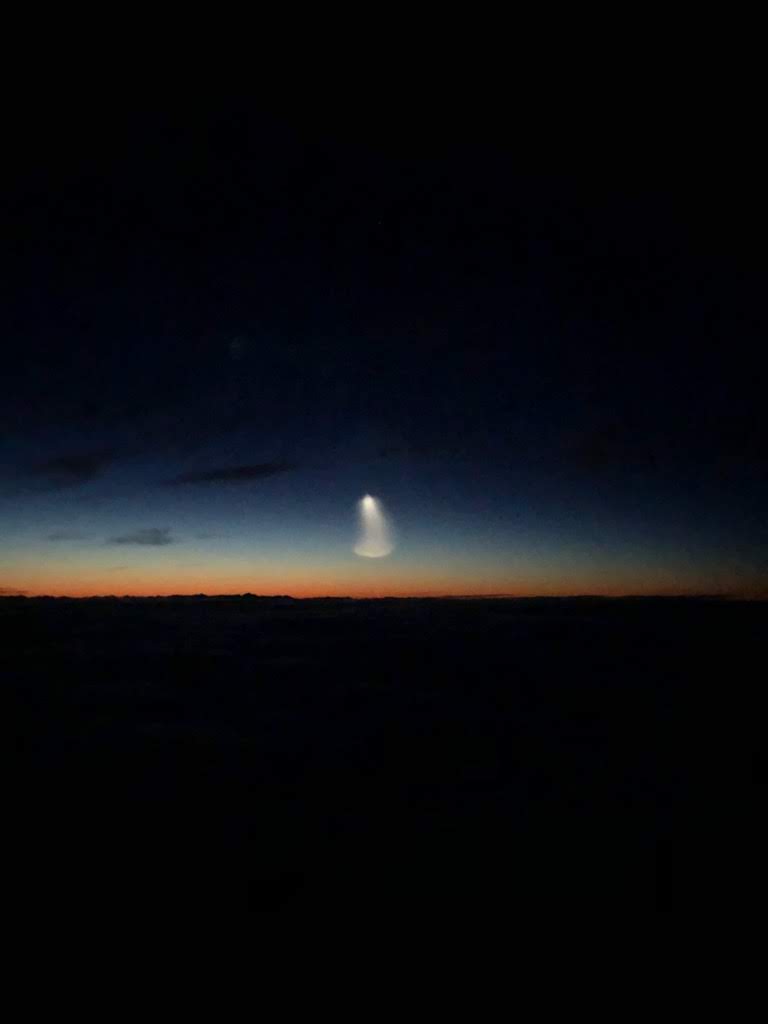
The CAPER-2 rocket launch was captured by pilot Eivind Trondsen on the Lufttransport Dornier 228 flight from Ny-Ålesund to Longyearbyen. The sun illuminated rocket trail is seen towards the south horizon as the rocket penetrates the upper layers of the atmosphere.
More details here.
11.04.2019

U.S. Ambassador to Norway
We are proud to announce that the U.S. Ambassador to Norway and former Rear Admiral United States Navy Kenneth J. Braithwaite has visited KHO. He was informed about our long standing relation and excellent co-operation with U.S. space science.
01.04.2019

CAPER-2 rocket launched!
Today at 09:26:58 UT the Cusp Alfven and Plasma Electrodynamics Rocket-2 (CAPER-2) was launched from Andøya over Svalbard into perfect optical cusp conditions as seen from KHO.
ASC:Info NORUSCA camera: Movie
Data Scrn dumps:[ 1, 2, 3, 4, 5, 6, 7, 8, 9, 10, 11, 12]
04.01.2019

2018

TRICE-2 rocket campaign!
Again KHO supported two more sounding rockets launched from Andoya over Svalbard in perfect science conditions into a pulsed reconnecltion event. The Twin Rockets to Investigate Cusp Electrodynamics-2 (TRICE-2) launched 2 minutes apart at 08:28 UT.
ASC Launch video More info here.
08.12.2018

VISIONS-2 rocket campaign!
KHO supported today the VISualizing Ion Outflow via Neutral atom Sensing-2 (VISION-2) rocket campaign. Its aim is to detect neutral outflow in the upper magnetosphere associated with the dayside aurora. The event was recorded by one of our BACC cameras.
See [Blog, BACC: Movie, ASC: Info]
07.12.2018

10 years anniversary
KHO celebrates 10 years of operation and studies of the optical aurora and airglow. Thanks to our colleagues/groups that have installed instruments at the observatory. Also thanks to Statsbygg, Longyearbyen and all of our friends that support us.
Svalbardposten [1]
30.10.2018

Light pollution network
KHO has joined the STARS4ALL project which is a collective awareness platform for promoting dark skies in Europe, funded by the EU. A TESS-W photometer is installed to monitor sky brightness in units of star magnitude all year round.

Photometer info here.
29.10.2018

SuperDarn radar down!
Today at 10 LT our SuperDarn radar took a hard hit by bad weather conditions and is unfortunately out of operation. Wind gusts up to 20 m/s in combination with icing conditions bended the masts 135 degrees down to the ground. 45 mm diameter ice tubes was super clued around the 6 mm wires, increasing the mass by 1.2 kg per meter wire used in the construction.
A comprehensive study will follow!
23.10.2018

Mass production!
Together with NTNU AMOS and Moon Labs we are proud to announce that our first serial produced Hyper Spectral Imager (HSI) no. v4J arrived in the mail today. It is based on our work that has been among the top 10 most read papers for six months in Optics Express (2018).

Read paper here.
10.10.2018

Dr. Norah Kaggwa Kwagala!
KHO congratulates Norah Kaggwa Kwagala at the BCSS on successfully defending her PhD titled: Thermally excited 630.0 nm emissions in the polar ionosphere. She has actively used optical data from both us and the Eiscat radar.

More info here.
17.08.2018

OSA press release
Our work on small and lightweight hyperspectral imagers has been awarded a press release by the Optical Society of America (OSA). Drone-based land and ocean spectral mapping is now possible at very low cost.
Read press release and paper here.
05.03.2018

2017

Spaceborn!
We are proud to announce that KHO is part in the satellite proposal of NTNU AMOS that just got funded by the Norwegian Research Council. Our knowledge of hyperspectral imaging will fly into space!
Watch Video
23.12.2017

In the spotlight!
KHO have hosted two large TV productions in December. NRK is producing a documentary about the Nordic winter and NHK (Nippon Hoso Kyokai) - Japan Broadcasting Corporation is planning for the first time to broadcast the dayside aurora in 360 view.
More info
18.12.2017

Aurora Forecast 3D released
The new auroral forecast is now finally released. It is a cross-platform app for both Apple and Windows computers. It is published on Google Play for Android and App Store for iOS phones. It forecasts the aurora oval up to +0, +1, and +4 hours ahead in time at any location on the planet using a 3D graphical layout.
More info
10.08.2017

360 image of the aurora
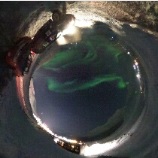
I finally got some time to play with the Ricoh Theta S camera. My first target is the substorm aurora above Svalbard on 3rd of Mars 2017. The exposure time is 3.5 second at ISO 1600. This is promising indeed!
View
Photo: F. Sigernes
03.03.2017

Doctor Xiangcai Chen
Salute! Xiangcai Chen has defended with success his PhD thesis titled: "A study of dayside open/closed field line boundary dynamics using simultaneous ground-based optical and HF radar observations". The defense was on Tuesday 28th of February 2017.
Read more
28.02.2017

2016

Doctora S. E. Holmen
We are proud to announce that Silje Eriksen Holmen has defended her PhD thesis "Trends and variability of polar mesopause region temperatures attributed to atmospheric dynamics and solar activity". The defense was on Tuesday 19th of December 2016.
19.12.2016

Storm ripped off our roof!
The storm on Monday 7th of November ripped off half of our roof of the service section. It took off and landed 50m away from KHO towards Eiscat, right on top of the new magnetometer from PRIC. The Sensor survived the attack. Five minute average wind speeds were up to 30 m/s out of the Bolterdalen valley towards North. The Company Svalbard Bygg As has started the repairs.
See damage: [Images]
11.11.2016

Australian 60 Minutes
The newsmagazine 60 Minutes from Australia has visited KHO. They learned about the origin of the Aurora and was given a tour of the Observatory and the EISCAT radars. The airborne footages of the radars by their Quadrocopter are really astonishing.
See YouTube: [video]
11.04.2016

Phillipe Boucher
Philippe Boucher has broadcasted on the Euronews program "Learning World" a film about our activity on the mountain. The film called "Water Odyssey - The closest university to the North Pole" has been translated into 13 languages all over Europe including Arabic.
See film: [movie]
15.04.2016

2015

Front cover of JGR
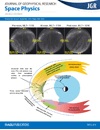
Our PhD student Xiangcai Chen has together with space physics colleagues from China made the front cover of the Journal of Geophysical Research (JGR). The paper is an extensive study of diffuse dayside aurora during quiet geomagnetic conditions, over a time period of 7 years. A new type of diffuse aurora is observed at magnetic noon and is named throat aurora.
More info: here
09.11.2015

Mission complete!
KHO has successfully supported the Rocket Experiment for Neutral Upwelling 2 (RENU2) campaign. Our instruments together with the Eiscat radar identified and tracked the target - the dayside aurora - and the rocket was launched at 07:34 UT from Andøya Space Centre.
More info: [1] [2]
13.12.2015

Snow mapping by drones
We are happy to learn that Baptiste Vandecrux, Marco Marcer and Emiliano Cimoli have defended their masters successfully at the Technical University of Denmark (DTU) on snow distribution by the help of Radar, Quadrocopters and Optics. KHO salute you!
Read all: [1] [2]
28.10.2015

Master Norah
Congratulations to Master Norah Kaggwa Kwagala! She has studied dayside 630.0 nm emissions due to thermally excited O(1D) in the cusp region ionsphere over Svalbard using both KHO and Eiscat. She is now a PhD. student at The Birkeland Centre for Space Science (BCSS).
June 2015

Aurora Skycam
KHO has teamed up with Aurora Skycam - a camera network with professional photographers that aims to provide real-time displays and alert systems of the aurora across the northern hemisphere.
More info ...
18.05.2015

The total eclipse
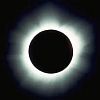
The preparations for the total eclipse of 20th of March 2015 have started with both airborne and ground-based campaigns planned. The totality of the event is only 147 seconds beginning at ~11:10 LT. Look 166o South-East and 11o above the horizon to see it.
More info...
26.02.2015

ICI-4 Launched!
AGF-304/804 Master and PhD students provided radar support for the University of Oslo scientific sounding rocket ICI-4 mission last night. The rocket was launched successfully from Andøya Space Centre at 23.06 local time.
20.02.2015

Queen Sonja
Her Royal Majesty Queen Sonja of Norway has visited KHO. Together with friends she inspected key instruments and was given an update on our research on aurora and airglow. The global weather machine and solar impacts was also discussed in relation to possible climatic changes. We are very happy for the Queens interest in our work.
05.02.2015

2014

C-REX launched successfully!
KHO is part of the Cusp Region EXperiment (C-REX), a NASA sounding rocket mission that just released a large constellation of artificial clouds into the ionosphere above the Greenland Sea. The rocket was launched from Andøya Space Centre at 08:05 UT on 24th of November, 2014.
More info ...
24.11.2014

Dr. Holmes, I presume?
A new protonic is born! Jeff Morgan Holmes defended on Friday the 29th of August at the University of Oslo (UiO) his PhD titled: The Protonics project: distributed observations of auroral dayside Doppler-shifted hydrogen emissions. KHO salute you!
More info ...
29.08.2014

Master Kinga
Congratulation to Master Kinga Albert! The thesis is called: Svalpoint: A multi-track optical pointing system. It enables us at KHO to track any object on the night sky with multiple instruments, simultaneously. Her work opens new opportunities for us and we really look forward to start using the system.
More info ...
20.08.2014

2013

Finally safe!
All the 77 rooms of KHO are now secured by an automatic fire extinction system based on the INERGEN gas. The work was done by the company Fire Eater AS. Our one of a kind instruments are all extra protected. But, we hope not to use the system at all.
[Wiki:Inergen] [Fire Eater AS presentation (no)]
29.11.2013

KHO airborne!
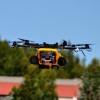
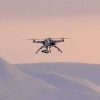
Our first flight with the Phantom Quadrocopter was a success. Location is close to the old Auroral station in Adventdalen. Remote sensing of any target of interest is now possible at very low cost. Our own sensors will soon be deployed onto these stable flying platforms.
Read more
12.08.2013

Royal visit
Her Royal Majesty Queen Sonja of Norway has been with friends to KHO. Together with Sysselmannen she inspected key instruments and learned about the dayside aurora and airglow. We are very proud and happy. A nice video of the event is published at the Royal Youtube channel:
Read more: [YouTube]
01.02.2013

2012

Hyperspectral auroras
Our NORUSCA II camera has made headline news at the Optical Society of America (OSA) as first-ever instrument to capture hyperspectral images of Earth's Auroras. The press release is a result of our paper just published in Optics Express.
Read more: [OSA]
29.11.2012

Status quo: Excellent!
The Space physics group at UNIS has become partner in a new Norwegian Center of Excellence (SFF centres) led by the Birkeland Center for Space Science at the University of Bergen. The centre will receive NOK 16 million per year for up to ten years - Hallelujah!
12.11.2012

BBC News
Celebrity science editor David Shukman from BBC News has visited KHO and SPEAR. Exclusive interviews with our own Profs. Dag Lorentzen and Lisa Baddeley concerning solar storms and satellite navigation went nationwide on UK media.
Read more
27.09.2012

Optics award to Silje
KHO PhD. Student Silje Eriksen Holmen has won the Young Scientist Award for her presentation about the Svalbard mesospheric temperature record at the 39th annual European Meeting on Atmospheric Studies by Optical Methods (39 AM) in Sopot, Polen, August 2012.

27.10.2012

Our forecast goes public
The Auroral forecast at KHO is now available for all smart phone platforms including Android, iPhone and Windows.
The apps were released on Andøya Rocket Range 50 years anniversary, to honour their contribution to space physics and cooperation with UNIS.
More info
16.08.2012

2011

ICI-3 launched!
The ICI-3 rocket was launched at 07:21:31 UT, Dec. 03 2011. KHO provided ground support to the campaign. The aim of the rocket is to investigate space weather and find out why GPS signals are disrupted in the post noon dayside / ionosphere.
03.12.2011

Turtle mode
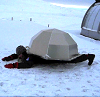
Students attending the UNIS course AGF-210 (The middle polar atmosphere) show us new and creative ways of removing dome covers at KHO. Both scared and safe turtle modes are demonstrated.
Film clips: [.wmv] [1] and [2]
03.11.2011

New Japanese camera
A new Japanese instrument from the University of Electro-Communications (UEC) in Tokyo is now beeing installed at KHO. The all-sky imager will detect how polar cap patches (large scale plasma blobs) changes in shape in relation to dayside electron precipitation.
More info
24.10.2011

Mobile Auroral forecast
Our auroral forecast service at KHO is now available as a mobile application for phones that runs on the android operating system (version 1.5 and up). The program forecasts up to 1 hour in time the size and location of the auroral ovals, mapped on to a solar illuminated globe.
More info
06.09.2011

China joins KHO
The Polar Research Institute of China (PRIC) and UNIS are now initiating a long term cooperation in studies of space and atmospheric physics. PRIC will install a new all-sky camera at KHO to complement measurements from the Arctic Yellow River Station in Ny-Ålesund.
More info
04.04.2011

The NORUSCA II Cameras
Two prototype auroral cameras are now constructed together with Russian and Ukrainian scientists. These hyperspectral cameras use new electo-optical technology to image the night sky as a function of wavelength with no moving parts!
More info
14.02.2011

First airglow image
Finally, after years of work we are able to image the airglow layer from KHO. The breakthrough came with our new near-infrared all-sky camera that was installed in December. It is now possible to monitor the weather at an altitude of ~90 km above ground level with high spatial resolution.
More info
25.01.2011

2010

Post Doc Margit!
We are proud to inform that Dr. Margit Elisabet Dyrland has been awarded a personal 3 years post-doctoral fellowship by the Norwegian Research Council (FRINAT). She will study gravity waves and their impact on circulation and temperature in the middle atmosphere.
More info
17.12.2010

The RENU rocket
KHO has been used as head quarter for a Rocket campaign that aims to study the Effect of Neutral Upwelling of upper atmospheric oxygen atoms during dayside aurora (RENU). The rocket was launched from Andøya Rocket Range at 06:38 UT 12th December 2010.
More Info:  1  2
02.12.2010

Substorm students
The students at the Polar Magnetospheric Substorms course AGF-345 experienced during their fieldwork at KHO and EISCAT a spectacular auroral display. Two nights of excellent datasets were collected for their project work.
26.11.2010

All-Sky Airglow Imager
A new high throughput near infrared all-sky camera made for imaging of mesospheric airglow has arrived to Svalbard. The instrument is made by Dr. Trond Trondsen at Keo Scientific Ltd. The camera system will be installed at KHO.
25.10.2010

Dr Margit!
Dr. Margit Dyrland has defended and finsihed with her PhD! The thesis is called: Multi-instrument studies of polar mesopause region temperature and airglow variablity. It is a study of the weather at 90 km altitude above Svalbard.
23.02.2010